In 2025, there’s no shortage of blanket inspiration—but figuring out the right size? That’s still a must-know—especially if you’re not following a pattern. This helpful guide to crochet blanket sizes (and knitting blanket sizes, too!) includes standard dimensions for everything from baby blankets to king-size throws. It’s a must-have reference if you’re designing your own project or working without a pattern. Be sure to bookmark it—you’ll want to come back to this guide again and again in 2025 and beyond.
UPDATED: APRIL 16, 2025 BY BRITTANY
This post may contain affiliate links.
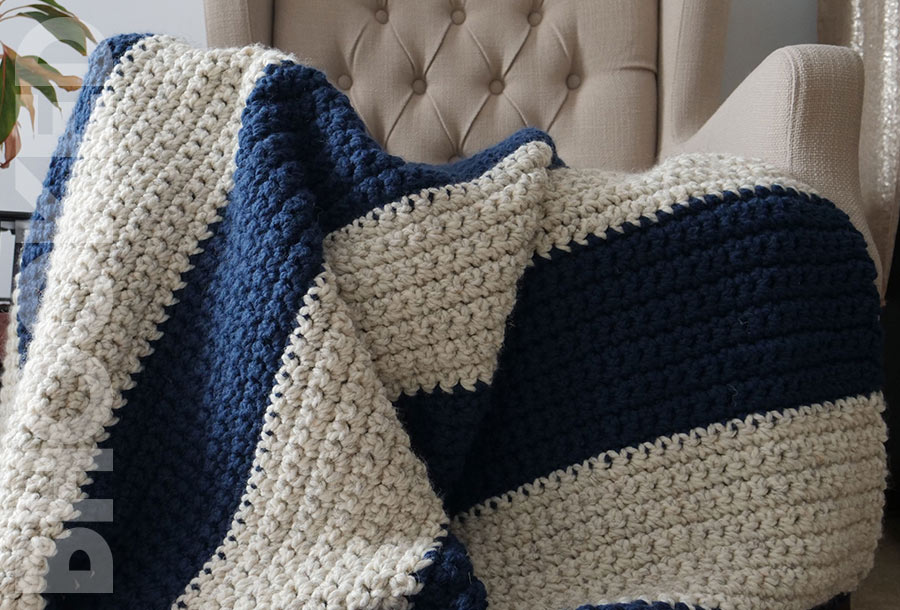
This guide was designed to answer all your questions about knitting and crochet blanket sizes. Remember, the size of your blanket isn’t just about aesthetics – it’s about functionality too. A small lapghan might be perfect for adding a handmade touch to your reading nook, while a larger blanket will be perfect for movie night.
Here’s a quick overview of the topics we will cover in this article:
- Knitting and Crochet Blanket Sizes Chart
- Tips for Blanket Size Customizations
- Understanding Knitting and Crochet Blanket Sizes
- Yarn Quantity Estimates by Blanket Size
- Stitch Pattern Considerations for Knit and Crochet Blankets
- How Many Do You Chain For a Crochet Blanket?
- Do the Knitting & Crochet Blanket Sizes Need to Match Exactly?
- How Big Should a Crochet Throw Blanket Be?
- What Size is a Crochet Lap Blanket?
- What Yarn is Best for Crochet Blankets?
- How Big is a Full Sized Crochet Blanket?
- How Big is a Lovey Blanket?
- Free Crochet & Knitting Blanket Patterns + Tutorials
What is a good size for a crochet blanket?
The sizes of crochet blankets and afghans will depend on their use. Here are some of the most common blanket types and their standard size:
Knitting and Crochet Blanket Sizes
| Type of Blanket | Width x Height |
|---|---|
| Lovie / Pet | 24″ x 24″ |
| Bassinet | 16″ x 36″ |
| Car Seat | 20″ x 24″ |
| Stroller | 30″ x 35 |
| Crib | 30″ x 54″ |
| Receiving Blanket | 36″ x 36″ |
| Standard Baby Blanket | 42″ x 52″ |
| Swaddle | 48″ x 48″ |
| Lap Blanket | 36″ x 48″ |
| Toddlers/Child | 42″ x 48″ |
| Couch Throw | 48″ x 72″ |
| Twin Size Bed | 48″ x 78″ |
| Full Size Bed | 60″ x 78″ |
| Queen Size Bed | 66″ x 84 |
| King Size Bed | 80″ x 84″ |
Tips for Blanket Size Customizations
Sometimes the standard sizes don’t quite fit your vision—and that’s okay! Here are a few tips to help you confidently customize your blanket size:
- Start with a standard as your base. Use the size chart as a jumping-off point, then adjust the width or length to fit your needs.
- Think in repeats. Choose stitch patterns or motifs (like granny squares or cables) that are easy to resize by adding or removing repeats or multiples.
- Swatch first. Make a small swatch to see how many stitches and rows you get per inch—this helps you estimate how many you’ll need for your custom size. This post will help you figure out your foundation chain with the new size, and this post will help you estimate how much yarn you’ll need to finish your blanket. And don’t forget, you can always adjust your hook size slightly to tweak the size a little if you need to.
- Consider the drape. A looser stitch pattern may stretch or grow over time, especially with heavier yarns. Take that into account when deciding on final dimensions.
- Plan your borders. If you’re adding a border, factor that into the total size so your blanket doesn’t end up larger than planned. Here’s a post with five of the best crochet blanket borders!
Customizing your blanket size can feel a little like freestyling—but with these tips and a good chart to guide you, you’ll be set up for success.
Understanding Knitting and Crochet Blanket Sizes
Blanket size impacts its functionality so it’s important not to overlook this detail. The good news is that when it comes to knitting and crochet blanket sizes, you won’t find drastic differences compared to other blankets in your living space. So, by using some of the other blankets in your space as inspiration, you’re ensuring your blankets are as functional as they are comforting.
I wouldn’t worry too much about matching your blanket size to the size chart (or other blankets in your home) exactly. You can always make minor adjustments to the size to meet your needs or work with the crochet hook and yarn weight you plan to use in your blanket.
Yarn Quantity Estimates by Blanket Size
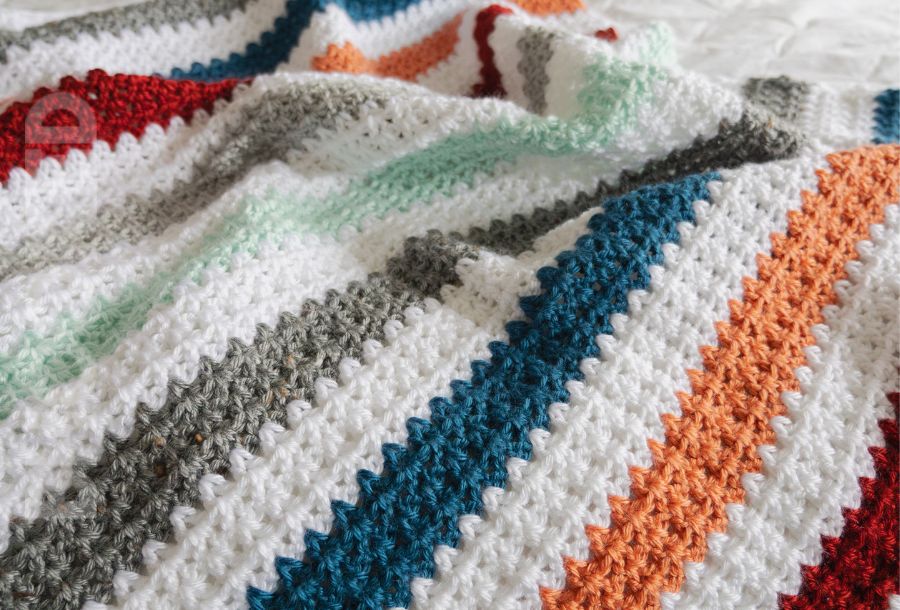
Knowing how many skeins of yarn to buy for your project is crucial for making sure you don’t run out mid-blanket! Here are approximate yarn yardage estimates for different blanket sizes, using worsted weight yarn (and assuming a standard stitch pattern). Keep in mind that these amounts can vary depending on your stitch choice, yarn thickness, and tension, but it’s a good starting point if you have no clue where to start.
If you want a more exact estimate of how much yarn you’ll need to crochet or knit your blanket, knitting or crocheting a gauge swatch is the easiest and quickest way to figure this out. This tutorial will walk you through how to figure it out!
- Baby Blanket (42″ x 52″):
Approx. 800–1,000 yards
Perfect for a soft, cozy blanket that’s just the right size for a crib or stroller. - Lapghan (36″ x 48″):
Approx. 1,000–1,200 yards
A great size for a throw to keep on your couch or for an extra layer while you relax. - Throw Blanket (50″ x 60″):
Approx. 1,500–2,000 yards
Ideal for snuggling up on chilly evenings or for a decorative touch in your living room. - Twin Size (66″ x 90″):
Approx. 2,000–2,500 yards
A versatile blanket size for a single bed or extra coverage while lounging. - Full/Double Size (80″ x 90″):
Approx. 2,500–3,000 yards
Perfect for a bedspread or a more generous throw for larger seating areas. - Queen Size (90″ x 90″):
Approx. 3,000–3,500 yards
A large blanket that works well for covering a queen-sized bed, with plenty of drape for extra warmth. - King Size (108″ x 108″):
Approx. 3,500–4,000 yards
A luxurious, full-sized blanket that can fit a king-sized bed and create a statement piece.
Stitch Pattern Considerations with Knit and Crochet Blankets
The stitch pattern you choose can have a big impact on the final size and texture of your blanket. Different stitches create varying degrees of stretch, drape, and thickness, so it’s important to think about how they’ll affect the overall look and feel of your finished blanket. Here are a few things to keep in mind when customizing the size of your blanket based on stitch patterns:
- Lacy Stitches:
Stitches like shells, v-stitches, or some chevrons tend to create a more open, airy fabric. These patterns can make your blanket feel larger than it actually is, so you may need to adjust your stitch count or add more rows to compensate for the increased stretch. - Solid Stitches:
Stitches like single crochet, half double crochet, and double crochet tend to create a denser, more compact fabric. These will give your blanket more structure and may result in a smaller finished size compared to open, lacy stitches. If you’re using a solid stitch, you may need fewer rows or stitches to reach your desired size. - Textured Stitches:
Textured stitches like bobble, basketweave, and cables add depth and interest to your blanket, but they can also shrink the fabric slightly due to the tension created by the raised stitches. You may want to make a slightly larger starting chain or add more rows to ensure you reach your desired size. - Stretchy Stitches:
Stitches like granny squares or basic ribbing patterns can result in more stretch, especially if you’re working with a soft or bulky yarn. These can help your blanket feel larger and more flexible, so be mindful of how much it stretches when choosing your stitch pattern. - Multi-Stitch Patterns:
If you’re using a combination of stitches in your blanket (for example, alternating between granny squares and solid rows), make sure to account for the different stitch heights and the way they impact the final size. Staggering your stitch heights may require some adjustments in your starting chain or row count to keep everything even.
By thinking about how your stitch choice affects your blanket’s overall size, you can make better decisions when customizing your project. Whether you want a snug and cozy throw or a wide, drapey bedspread, these tips will help you adjust your design to fit your vision.
Do the Knitting & Crochet Blanket Sizes Need to Match Exactly?
While it’s a good idea to use these knitting and crochet blanket sizes as a reference, it’s perfectly okay if your blanket doesn’t match them exactly. In fact, it’s pretty common for a pattern to be close, but not exact.
This is because some stitch patterns simply can’t fit, and so designers get it as close as possible without disrupting the stitch pattern. A perfect example of this is a ripple stitch.
It’s also perfectly acceptable for you to do your own thing. As long as the blanket will function as you need it to, sometimes making your own tailored dimensions is the right way to go. Use the chart above as a guideline, but know that it doesn’t have to be an exact science.
One thing to note about a pattern you might be following:
Anytime you follow a blanket pattern from a book, magazine, online, or here on this website, you can trust that the size will be right (as long as your gauge matches the pattern) and that there are no additional steps you need to take.
How Many Stitches Across for a Crochet Blanket?
While figuring out how many chains you need for your blanket is pretty straightforward, the answer isn’t the same for everyone or every blanket. The hook, yarn, and stitch all play a role in how many chains you need to start out with.
To help you figure it all out, we have a detailed guide that’ll walk you through the process step-by-step.
That article will cover all basic stitch patterns you may want to use for your blanket. However, if you want to use a ripple, chevron, or other wavy stitch, use this guide to help you figure out how many chains you need to start your blanket.
You can also check out this free blanket resizing calculator from Easy Crochet.

Frequently Asked Questions about Knitting & Crochet Blanket Sizes
How big is a throw blanket in crochet or knitting?
The size of a crochet or knitting throw blanket is usually 48″ x 72″ (122 cm x 183 cm). This may vary slightly depending on how much coverage you want for your blanket.
What is the best size for a crochet lap blanket?
Most crochet lap blankets measure 36″ x 48″ (97 cm x 122 cm). You can customize them to be bigger or smaller depending on your lap size.
What yarn is best for crochet blankets?
The last thing you want to do is spend time making a blanket with the wrong yarn. There are a variety of “best choice” and we outline them all in our Best Yarns For Blankets article here.
How big is a full size crochet blanket?
A full size crochet blanket usually measures 60″ x 78″ (152 cm x 198 cm). This is usually enough to drape down from the mattress as well.
How big is a lovey blanket?
A lovey blanket usually measures 24″ x 24″ (61 cm x 61 cm). If you need a crochet pattern for an adorable lovey blanket, check out our bunny lovey free crochet pattern and tutorial here.
What size should I make a baby blanket?
A good baby blanket size is around 30″ x 36″. It’s great for tummy time, swaddling, or tossing over a car seat or stroller.
How long should a crochet blanket be?
It depends on the use! Throws are about 60″ long, while bed blankets can go up to 108″ for a king-size. Use your own height (or the bed’s length) as a guide.
How do I calculate how much yarn I need for a specific blanket size?
Swatch a small section, measure how many yards it took, and scale up based on your desired size. I explain exactly how to do it in this post here.
Can I make a crochet blanket (or knit blanket) any size I want?
Of course! That’s one of the best parts of crocheting or knitting—you can make it as big or as small as you like.
Free Knitting and Crochet Blanket Patterns + Tutorials
Making blankets is kind of our jam. Here are a few of our favorite crochet and knitting blankets, all with a free pattern and tutorial to walk you through them step-by-step.