When you begin your journey down the path of crochet, you’re going to have questions. Lots of them. That’s not a sign you’re doing it wrong — it’s just what learning a new craft looks like. But the good news is there is an entire community of crocheters who have been exactly where you are and are more than willing to help.
If you’re just getting started and haven’t worked through the basics yet, my How to Crochet for Beginners: 10 Steps (with Videos) guide is the best place to begin — it walks you through everything step by step. Think of this post as the extra advice I’d hand you once you’ve got those fundamentals down.
Helping beginner crocheters is genuinely my favorite part of this job. Every pattern, tutorial, and blog post I’ve written has grown out of the gaps I found when I taught myself to crochet — all those moments I stopped and asked, “why do I have to do it that way?” or “when is this technique actually appropriate?” I didn’t have anyone to ask, so I tried, failed, learned, and tried again until I had my own answers. Now I get to hand them to you so you don’t have to start from zero.
Here are the crochet tips for beginners I wish someone had handed me before I got too far into my first few projects.
UPDATED: AUGUST 7, 2026 BY BRITTANY
This post may contain affiliate links. See our Disclosure Policy for more information.
1. Experiment — there’s no “wrong way” to crochet
In my humble opinion, there really is no wrong way in crochet, only different ways to get to a finished project. Some of my favorite designs started as experiments that had no business working. The best way to learn is to try something, watch it fail, and figure out why it didn’t work. Those failures stick with you far more than a tutorial ever will, and they’re usually the fastest route to understanding a technique instead of just memorizing it.
If a swatch looks wrong, don’t rip it out immediately. Sit with it for a minute and ask what happened — did you miss a stitch, add one, work into the wrong loop? That habit of troubleshooting your own work is the single biggest thing that separates a comfortable crocheter from someone who’s still white-knuckling every row.
2. Your hands and wrists will start to hurt — and that’s normal (to a point)
The repetitive motion of crochet is hard on joints and muscles, especially if you’re on a six-hour crochet binge (we’ve all been there). This does improve with time as your hands get used to the motion, but “improves” doesn’t mean “disappears.” Pay attention to what your hands and wrists are telling you.
A few things that help: take a break every 30-45 minutes, stretch your fingers and wrists between rows, and don’t grip your hook like you’re trying to strangle it — a lighter grip reduces strain more than people expect. If you’re dealing with pain that doesn’t ease up with rest, that’s worth mentioning to a doctor rather than pushing through. Crochet should be relaxing, not something you’re recovering from.
3. You are as good as your hook

Hooks matter more than most beginners expect. You don’t need to spend a fortune on the newest release, but finding a hook you genuinely like using changes how much you enjoy the craft and how consistent your stitches turn out. The comfort of your grip affects your tension throughout an entire project — a hook that fights your hand will show up in your gauge.
My own work improved noticeably once I picked up my Tulip Etimo hooks — I’ve written up exactly why I love them if you want the full breakdown. If you’re just starting out, don’t feel like you need the full set right away. Try a couple of different hooks and see which your hand prefers before you build out a whole collection.
Not sure where to start? My guide to the best crochet hooks to use walks through the different types (inline vs. tapered, aluminum vs. wood, ergonomic vs. standard) so you can pick based on your hand and budget instead of guessing.
4. Learn the four basic stitches first
Nearly every crochet stitch is a variation or combination of four foundational ones: single crochet, half double crochet, double crochet, and slip stitch. Master these four before you chase anything fancier. Once they’re second nature, you’ll pick up new stitches faster because you’ll already understand the underlying logic — most “new” stitches are really just familiar motions in a different order or worked into a different spot.
Before you get to the stitches themselves, though, every project starts one of two ways — with a foundation chain or a magic circle. It’s worth getting comfortable with How Many Chains Do You Need to Start Your Project? and How to Make the Magic Circle (or Magic Ring) in Crochet early, so the very first step of a pattern doesn’t trip you up.
This is also where getting comfortable with crochet abbreviations pays off, since most patterns lean on these four stitches from the very first line.
5. YouTube is your new best friend
Hundreds of free videos exist to teach you stitches, techniques, and full patterns start to finish. Search for the specific stitch, project, or technique you’re stuck on and watch a few different versions — you’ll find a teaching style that clicks for the way you learn. When you find a creator whose explanations make sense to you, subscribe. Having a small handful of go-to teachers you trust is more valuable than bookmarking a hundred random videos.
If you’re looking for a place to start, that’s exactly what the B.Hooked Crochet YouTube channel is here for — full tutorials, quick makes, and technique breakdowns, all built with beginners in mind.
6. US and UK crochet terms are not the same
The web is one of the best free pattern resources out there, but pay close attention to where a pattern comes from. If it’s written in UK terms and you learned US terms (or vice versa), you can end up making a completely different stitch than the pattern intended — the stitch names match up, but the actions behind them don’t.
Here’s a quick reference to keep nearby:
| US Term | UK Term |
|---|---|
| Single crochet (sc) | Double crochet (dc) |
| Half double crochet (hdc) | Half treble crochet (htr) |
| Double crochet (dc) | Treble crochet (tr) |
| Treble crochet (tr) | Double treble crochet (dtr) |
| Slip stitch (sl st) | Slip stitch (sl st) |
| Yarn over (yo) | Yarn over hook (yoh) |
Terminology is just one piece of reading a pattern successfully. Once you’ve got US vs. UK sorted, my guide on How to Read a Crochet Pattern covers everything else you’ll run into — abbreviations, stitch counts, and those tricky pattern repeats that trip up even confident beginners. And if repeats specifically are giving you a headache, grab my free Decode Any Crochet Pattern Repeat guide — it walks you through exactly how to read the asterisks and brackets that make patterns look intimidating.
7. Use social media as a source of inspiration
Seeing what other crocheters are making is genuinely motivating. I spend time on Instagram and Pinterest gathering inspiration and sharing what I find with the community — it’s one of the most rewarding parts of doing this. Follow a mix of designers, not just big accounts; smaller makers often post honest process shots and problem-solving that’s more useful to a beginner than a polished final photo.
8. You need a few essentials, but not everything at once

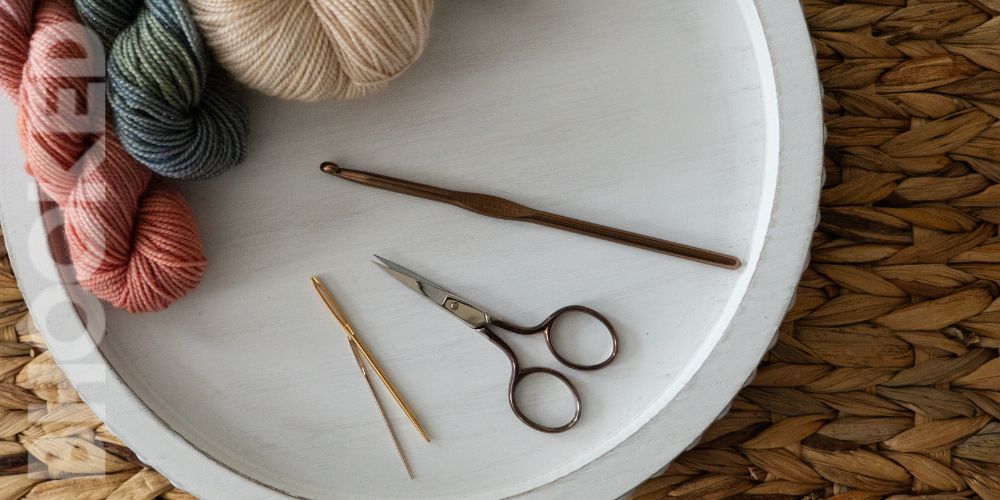
Crochet is one of the more affordable hobbies to get into, and that’s part of its charm. You don’t need a fully stocked craft room on day one. Starting out, you’ll need a darning needle, craft scissors, and two or three hook sizes — I recommend starting with a 5mm, 5.5mm, or 6mm, since those remain some of the most-used sizes even once you’re experienced. For your first several months, just buy what your current project calls for. Your toolbox will fill in naturally.
9. Yarn companies give away hundreds of free patterns
Every major yarn company publishes free patterns on their website, designed by working designers who release something new nearly every month. It’s worth bookmarking a few of your favorite yarn brands’ pattern libraries — it’s a steady, no-cost source of new projects, and a great way to see how professional designers structure their instructions.
10. Practice makes Better
It sounds cliché because it’s true. Looking at a seasoned crocheter’s work as a beginner can feel like an impossible gap to close. You will get there — I promise — as long as you keep going. Every crocheter whose work you admire started exactly where you are now, squinting at a pattern and wondering if they’re doing it right.
A few more things I wish I’d known sooner
The original ten cover the fundamentals, but these crochet tips for beginners wouldn’t be complete without a few things almost every crocheter learns the hard way. Consider these your bonus round:
Gauge matters more than you think — even outside of garments. It’s tempting to skip a gauge swatch, especially on smaller projects. But tension differences add up fast, and they’re the reason two crocheters can follow the same pattern and end up with different-sized finished pieces. You don’t need to swatch for everything, but for anything sized to fit a body, it’s worth the extra five minutes. Here’s the most important things you need to know about gauge when you’re ready.
Don’t be afraid to frog it. “Frogging” (ripping back your work) feels like a setback, but it’s often the fastest way forward. If something looks off three rows back, it’s almost always faster to rip back and fix it than to try to disguise it as you go.
Stitch markers are not optional, they’re a shortcut. Especially when working in the round or tracking pattern repeats, a stitch marker on your first stitch of the round (or the start of a repeat) will save you from losing your place — which is one of the most common reasons beginners think they’ve “miscounted” when they’ve actually just lost track.
These three are just the tip of the iceberg — I rounded up several more shortcuts like this in 10 Genius Crochet Hacks You’ll Love and Wish You Knew Sooner if you want the full list.
Ready to put it all together?
Remember, I’m here to help. Whether you came for one tip or read every single one, my hope is that these crochet tips for beginners make your first few projects feel a little less overwhelming. The best part of my day is watching you succeed — there’s nothing quite like finishing a project you’re proud of, and I want every one of you to get to that feeling.
If you’re ready to tackle your first real pattern, start with How to Read a Crochet Pattern — it builds on everything covered here and walks you through exactly how a pattern is put together, line by line, so you can dive in with confidence.