If you’ve ever started a project in the round, you’ve probably run into the term magic circle (also called a magic ring) in a pattern and wondered what it means. The magic circle is a way to start a round with an adjustable loop instead of a fixed chain ring. You crochet into the loop, then pull the tail to cinch the center completely closed. It sounds fussy, but it’s easier than it looks, and it’s worth learning.
In this tutorial, I’ll walk you through every step, show you the mistakes that trip most people up, and help you decide when a magic circle is the right choice. There’s a video too, so you can pause, rewind, and follow along at your own pace.
UPDATED: SEPTEMBER 23, 2026 BY BRITTANY
This post may contain affiliate links. See our Disclosure Policy for more information.

In this guide, I’ll walk you through the steps to master the magic circle (and answer a few questions along the way). Whether you’ve tried it before or are just curious about what makes it magic, you’re in the right place. Let’s get started!
New to crochet altogether? My How to Crochet for Beginners: 10 Steps (with Videos) guide covers the fundamentals from square one — the magic circle is one of the techniques you’ll want in your back pocket once you’ve got the basics down.
- What is the Magic Circle (Magic Ring) in Crochet?
- How Secure is the Magic Circle?
- How to Make the Magic Circle (Magic Ring)
- Watch How to Make the Magic Circle in this Quick Video
- What Happens After the Magic Circle?
- Common Magic Circle Mistakes (and How to Fix Them)
- When to Use the Magic Circle (and When Not To)
- Magic Circle Alternatives
- Magic Circle FAQs
The magic circle is the starting point for a huge amount of crochet: amigurumi, hats, coasters, baskets, and flat circles of every size. Once you can make one, patterns that begin with “magic ring” stop being intimidating. It’s a small skill that opens up a lot of projects.
It’s also very beginner-friendly, even though it has a reputation for being tricky. You only need a little yarn and a hook to practice, and a few tries is usually enough to get the feel of it. Each attempt takes just a couple of minutes, so it’s easy to try again until it clicks.
What is the Magic Circle (Magic Ring) in Crochet?
A magic circle (or magic ring) is an adjustable loop used to begin crochet in the round. You work your first round of stitches into the loop, then pull the tail to close the center completely. This gives you a tight, gap-free start with no hole in the middle.
Magic Circle vs. Chain Ring
The most common way to start a round is with a chain ring: you chain a few stitches, join them into a loop, and crochet into the center. This works, but the chain is a fixed size, so it usually leaves a small hole in the middle.
Sometimes that hole is part of the design, as in a traditional granny square. For amigurumi or hats, though, you want a solid center. The magic circle gives you a loop that slides, so you can pull it snug like a drawstring.
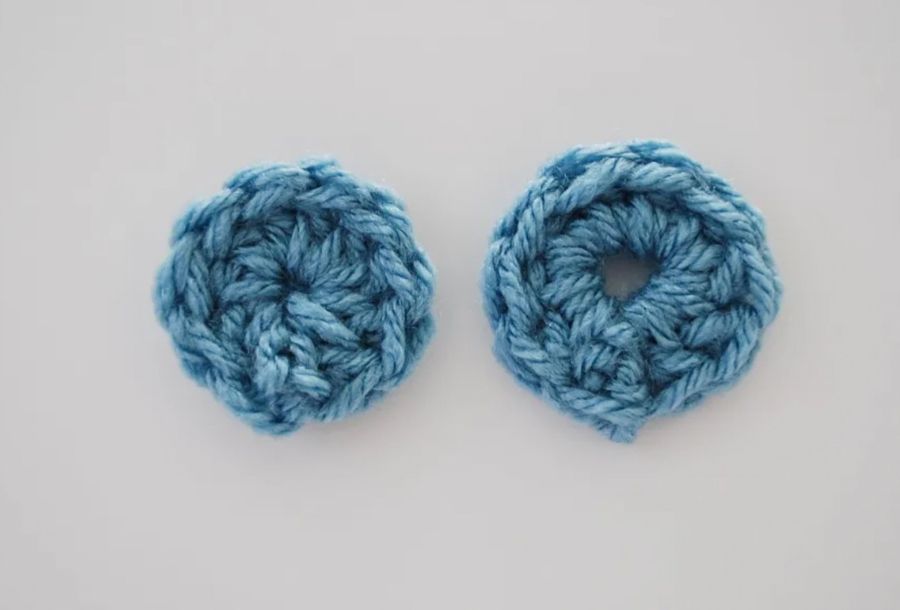
The magic circle, or magic ring, takes a different approach. Instead of a fixed foundation, you create a loop of yarn that acts as a sliding ring. This allows you to crochet your first round of stitches into the loop, and then pull the tail to tighten the ring—just like a drawstring—completely closing up the center.
By using the magic circle, you can create a neat, gap-free starting point for your project. This is especially useful for projects like hats, amigurumi, coasters, or anything else worked in the round.
How Secure is the Magic Circle?
A common worry is that a sliding ring will loosen over time and leave a hole anyway. When it’s done correctly, it stays secure. Pull the tail tight after your first round, then weave the tail in (Step 9 below) to lock it in place. Your center will stay closed, even on projects that get a lot of handling.
How to Make the Magic Circle (Magic Ring)
To make a magic circle, think of it as creating a flexible foundation rather than a traditional stitch. You can use any stitch you prefer within the magic circle. For this example, we’ll walk through the steps using three of the most common stitches: single crochet, half double crochet, and double crochet.
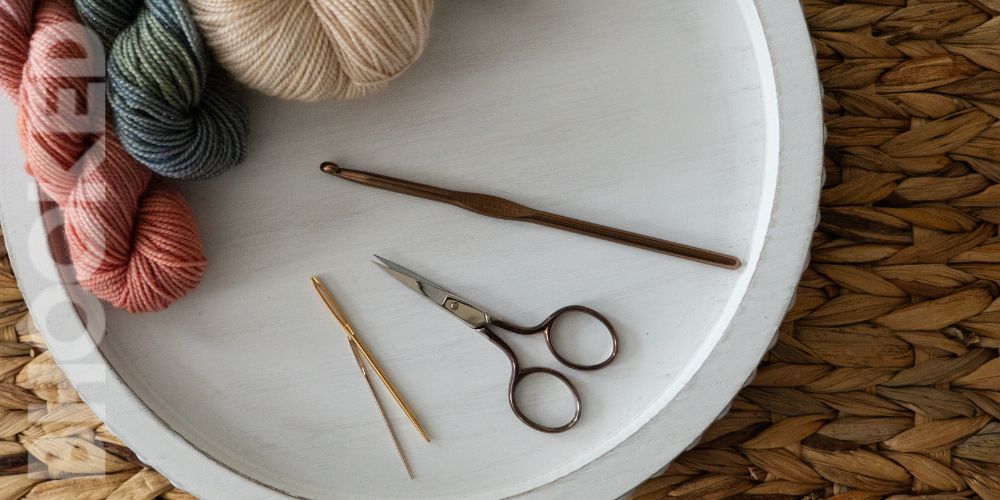
- Yarn: For practice, choose medium-weight yarn (like worsted weight). You only need a small amount to make a few stitches, so it’s perfect for testing this technique.
- 5.5 mm Crochet Hook. You can use a different size if you’re using a different yarn, but a 5.5 mm hook works well for practice.
Choosing yarn for practice: Smooth, light-colored worsted weight yarn is the easiest to learn on, because you can see each loop clearly. Fuzzy yarns like mohair blends hide the ring and make the tail hard to find. Very slippery yarns can loosen more easily, so save those for after you have the technique down.
Hook size and tension: If your first magic circle feels tight, go up a hook size while practicing. A loose grip and relaxed tension make the ring much easier to work into, and you can go back to your usual hook once the motion feels natural.
About the Magic Circle: Construction and Skills
The magic circle isn’t a stitch. It’s a flexible foundation. You make an adjustable loop, work your stitches into it (and around the tail), and then close it up. Any stitch can be worked into a magic circle, so the technique is the same whether your pattern starts with single crochet, half double crochet, or double crochet.
Once you’ve learned it, you can use the same skills for:
- Starting amigurumi pieces, from tiny heads to stuffed toys
- Beginning hats with a neat, flat crown
- Working flat circles like coasters, potholders, and rugs
- Reading “magic ring” in any pattern without hesitation
Stitches to Work Into Your Magic Circle
Your pattern will tell you how many stitches to work. These are typical starting counts:
- Single crochet: 6 stitches
- Half double crochet: 8–10 stitches
- Double crochet: 12 stitches
The steps below use single crochet, but they apply to any stitch.
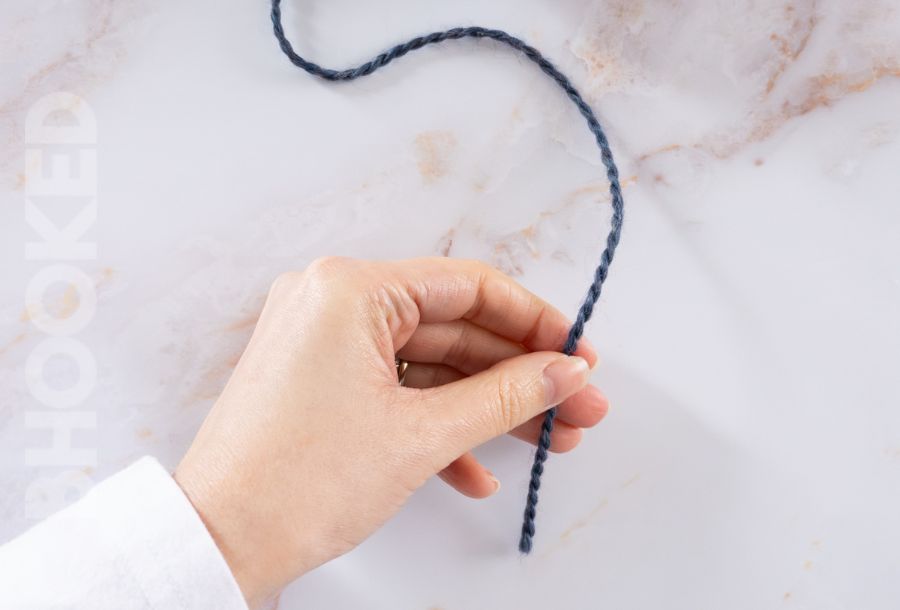
Step 1: Hold the tail of your yarn in your non-dominant hand, with the tail facing you and the working yarn away from you.
Step 2: With the tail steady, wrap the working yarn around your first two fingers twice, creating two loops.

Step 3: Cross the working yarn over the first loop so that it hangs further back.
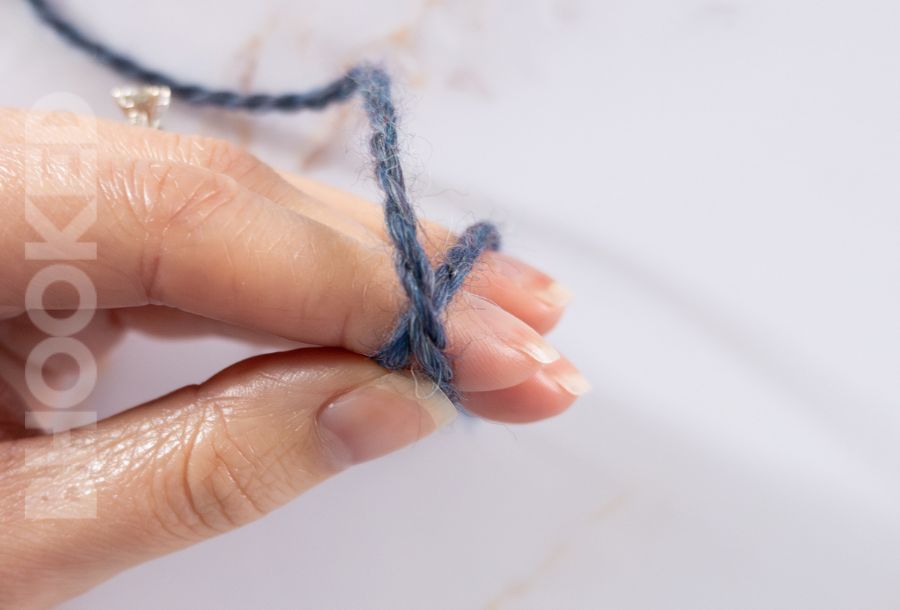
Step 4: Carefully release your two fingers, making sure the yarn stays in the same position.
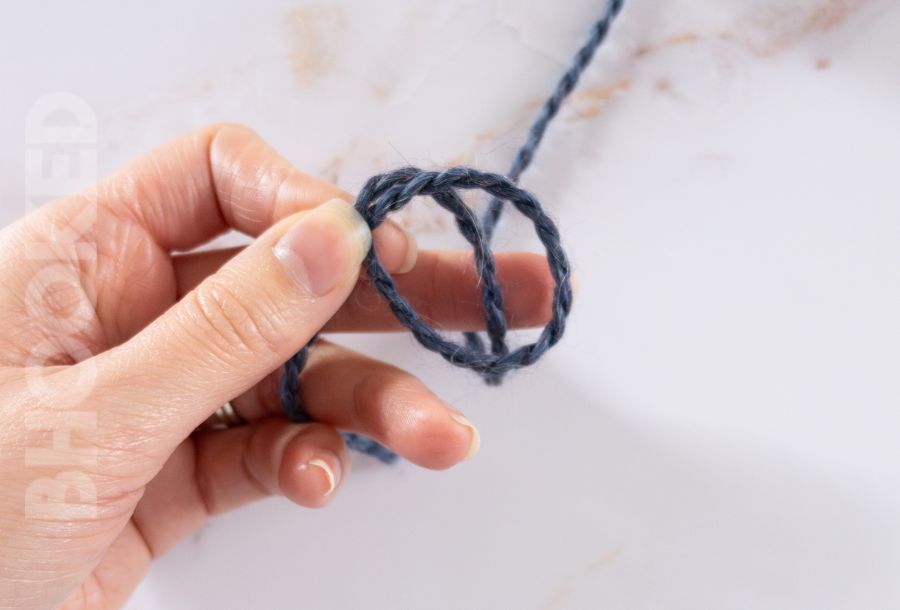
Step 5: Grab the working yarn strand with your crochet hook, and pull it through the loops on your fingers to form a chain. This will lock everything in place, but try not to disturb the tail.
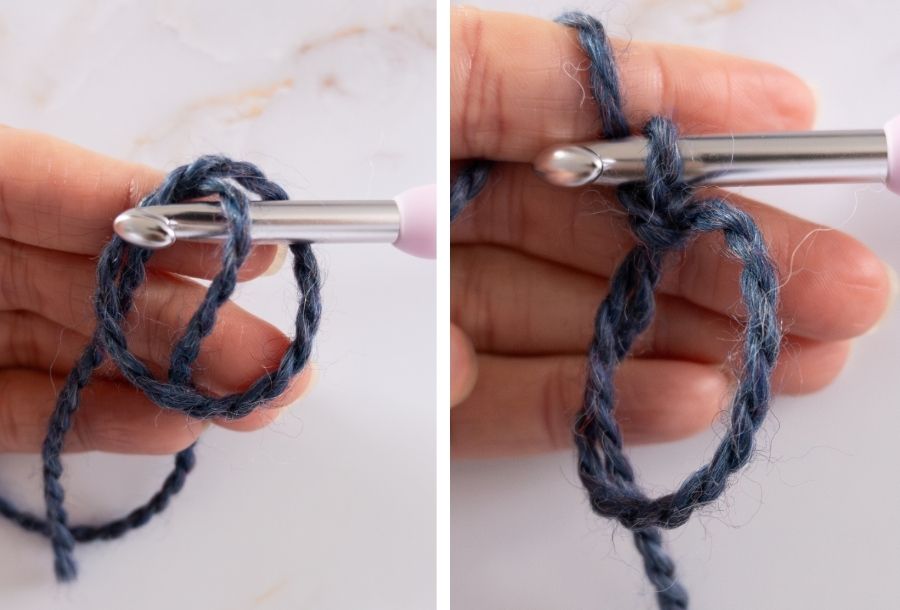
Step 6: Hold the ring with both fingers to keep the yarn in position and make it easier to crochet stitches into the circle.
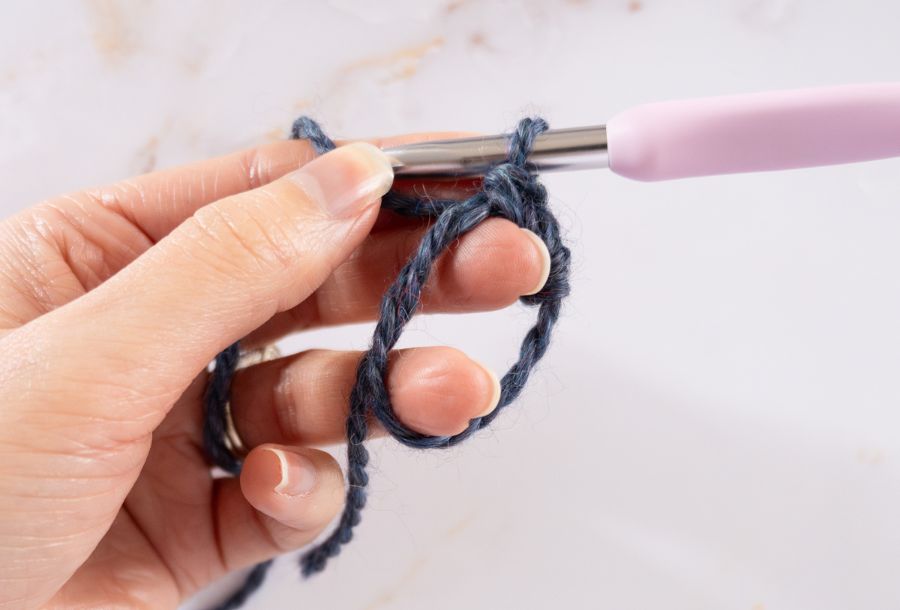
Step 7: Crochet as many stitches as your pattern calls for into the ring (single crochet, half double crochet, or double crochet—whatever you need). Make sure you crochet around the tail as well!
Step 8: Once you’ve made all your stitches, pull the tail of the yarn to tighten the circle and close up the center.
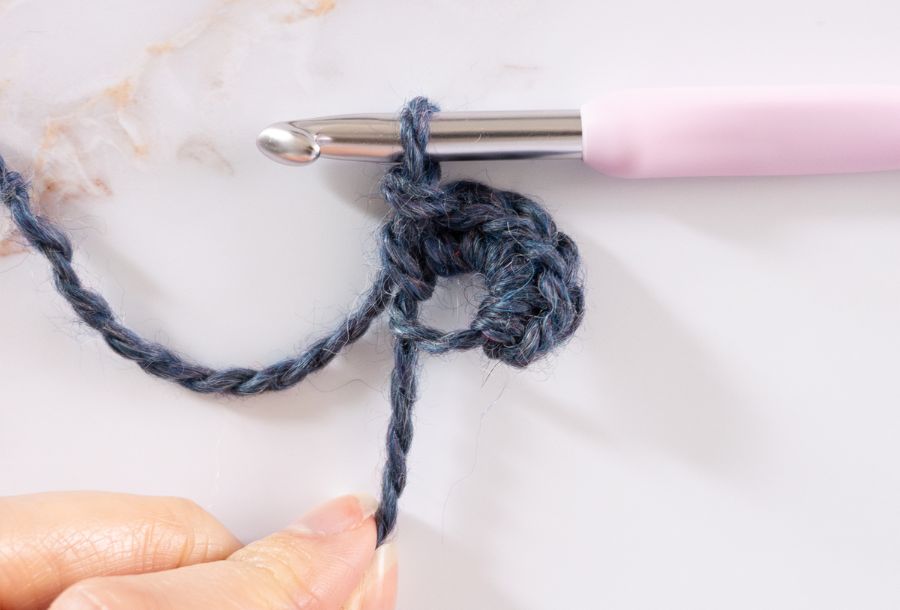
Step 9: Use the tail and a yarn needle to secure the opening. Thread the tail through the center of the ring, weaving it around a few times to ensure the opening stays tightly closed.

Want a fun way to practice the magic circle? Try my cute little crochet heart! It uses a few stitches to turn your magic circle into a cute heart you can attach to other projects.
Watch How to Make the Magic Circle in this Quick Video
Sometimes it’s easier to see the technique in action, and I’ve got you covered! Below is a video that walks you through the magic circle step-by-step. Follow along with me as I demonstrate the process, and feel free to pause and rewind as needed. It’s a great way to reinforce what you’ve just learned!
What Happens After the Magic Circle?
Once your ring is closed, you’re ready to keep going in rounds. Here’s what to know.
Count your stitches. Count the stitches in your first round before you move on. It’s easy to miscount when they’re packed into a tight ring. Your pattern lists the stitch count at the end of each round, usually in brackets.
Joining or working in a spiral. Some patterns join each round with a slip stitch, while others work in a continuous spiral (common in amigurumi). Check your pattern to see which one to use.
Mark your rounds. A stitch marker in the first stitch of each round keeps you from losing your place, especially in spiral rounds. A short piece of contrasting yarn works just as well if you don’t have one.
Common Magic Circle Mistakes (and How to Fix Them)
While the magic circle is a super handy technique, it can take a little practice to master. Let’s go over some common mistakes and how to avoid them, so you can work with confidence!
1. Leaving a Gap in the Center
One of the most common issues beginners face is leaving a small gap in the center of the ring. This often happens if the tail isn’t pulled tight enough after completing the first round of stitches. To avoid this, make sure you give the tail a good pull once you’ve crocheted all your stitches into the ring. If you notice a gap even after pulling the tail, you can gently tighten the loop further and adjust your stitches to close it up.
2. Tightening the Circle Too Much
On the flip side, if you pull the tail too tightly before you’ve finished crocheting the first round, you may have trouble getting your stitches into the ring. The magic circle should remain adjustable, so you can crochet your stitches comfortably. If you find the circle is too tight to work into, simply loosen the tail a little, giving you more room to stitch.
3. Not Securing the Tail Properly
It’s easy to forget, but securing the tail after you’ve tightened the magic circle is key to ensuring your work stays intact. After pulling the tail to close the center, make sure you weave in the loose end securely. This will prevent the circle from loosening later on, especially if you’re working on a project that will get a lot of handling (like amigurumi or a hat). Weaving the tail in helps lock everything in place.
These are just a few of the small details that trip up new crocheters — for more must-know basics like these, check out 10 Things Every Beginner Crocheter Must Know.
When to Use the Magic Circle (and When Not To)
The magic circle is a fantastic technique, but it’s not always necessary for every project. Knowing when to use it can help you achieve the best results. Here’s a breakdown of when the magic circle shines—and when you might want to stick with other methods.
Great for:
- Amigurumi: If you’re crocheting small, stuffed toys, the magic circle is ideal. It ensures a tight center that won’t leave any gaps, which is especially important when the pieces need to be stuffed.
- Hats: When working in the round for a hat, using the magic circle helps create a neat, gap-free crown that looks polished from the start.
- Coasters, Potholders, and Other Flat Circles: For projects that start with a circle and need a clean, solid center, the magic circle is perfect.
- Granny Squares (if the hole in the center isn’t a part of the design): If you want to minimize the hole in your center for your square, the magic circle is a good choice to keep it tight and neat.
Not as necessary for:
- Granny Squares (with an intentional hole): In traditional granny square patterns, the small hole in the center is part of the design. If that hole is part of your project’s aesthetic, you don’t need to bother with the magic circle. A simple chain loop will do the trick here.
- Other Lace or Openwork Projects: If your project involves a more open structure (like lace), you might not need the tightly closed center the magic circle provides. A chain loop may be more in line with the overall style.
In short, the magic circle is best when you need a tight, secure center. For projects where a bit of space in the middle is part of the look, or where you’re working with a loose tension, the magic circle isn’t necessary.
Magic Circle Alternatives
Not every project needs a magic circle, and you may prefer another method. Here are two common options.
Chain 2 method: Chain 2, then work your first round of stitches into the second chain from your hook (the first chain you made). This is quick and easy, and it leaves only a very small hole. It works well for small projects, though it can be harder to work into when you have many stitches.
Chain ring: Chain 4 (or the number your pattern calls for), then join with a slip stitch to form a ring and work your stitches into the center. This is the traditional method, and it’s the right choice when your pattern wants an open center, like a classic granny square.
Neither of these closes as tightly as a magic circle, but both are reliable when a small hole is fine or even wanted.
Magic Circle FAQs
Now you know how to start a project with a magic circle, and you’re well on your way to neat, gap-free centers on everything you make. It takes a few tries to get the feel of it, so keep practicing. Every crocheter starts somewhere, and it’s all part of the fun.
Ready to go further with circles? My full guide on how to crochet a circle covers everything from basic flat circles to more advanced shaping. And if terms like “magic circle” or stitch counts in brackets still trip you up, my guide on [How to Read a Crochet Pattern] breaks down exactly what to look for.
And if terms like “magic circle” or stitch counts in brackets still trip you up when you’re following a pattern, my guide on How to Read a Crochet Pattern breaks down exactly what to look for so you can follow any pattern with confidence.
Keep practicing, and don’t forget—crochet is all about enjoying the process and growing your skills along the way. Happy hooking!