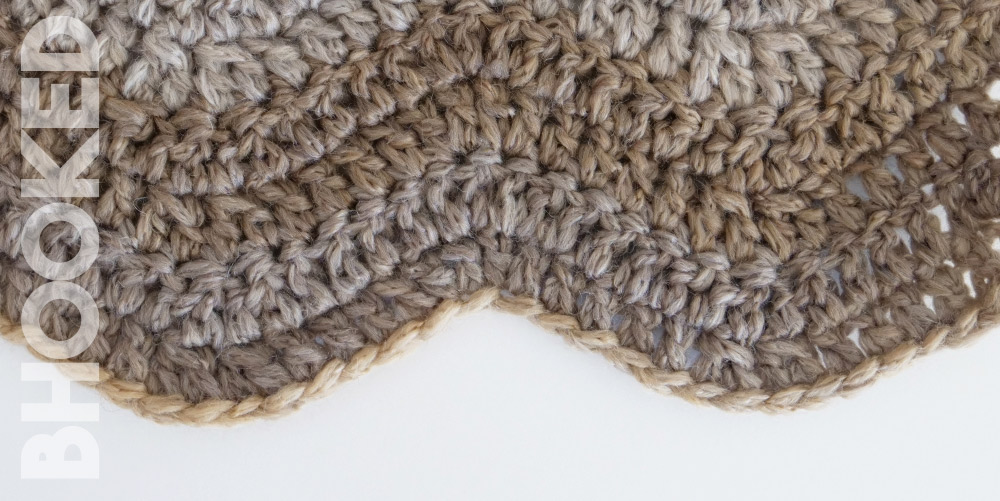
A crochet triangle may not be the most popular of shapes when it comes to project creation, but they’re more useful than you might think. Whether you need a filler shape for your motif blanket, or a carrot nose for your amigurumi snowman, learning how to crochet a triangle is worth your while.
UPDATED: OCTOBER 10, 2023 BY BRITTANY
This post may contain affiliate links. See our Disclosure Policy for more information.
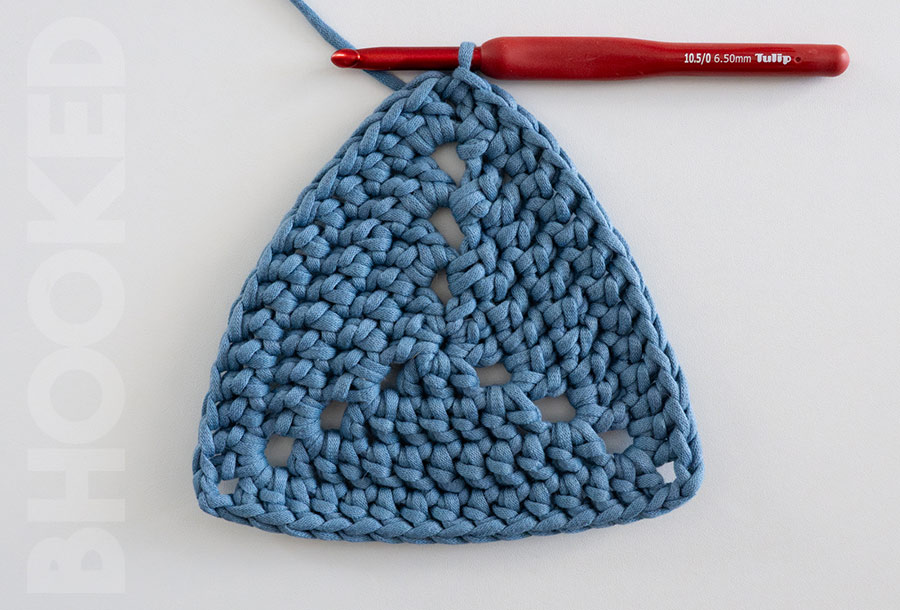
This guide was designed to answer all your questions about how to crochet a triangle. We’ll look at things like how many stitches you need in your triangle and a few different ways to start crocheting one. I’ll share step-by-step instructions, basic guidelines, and everything you need to know about crocheting a triangle.
Here’s a quick overview of the topics we will cover in this article:
- A Few Things to Know Before You Get Started
- How to Crochet a Triangle: Three Ways to Start the Triangle
- Basic Crochet Triangle Pattern: Rounds 1 and 2
- Crochet Triangle Increasing Formula
- Crochet Triangle Increase Chart
- How to Crochet a Triangle: Rounds 3 and Up
- How to Add More Rounds to the Triangle
- What is the First and Last Stitch of the Round?
- Where Do I Join to Finish the Round?
- What Happens If You Stop Increasing?
- What Happens If Your Triangle Doesn’t’ Lay Flat?
- What Happens If Your Triangle Looks Rounded In the Corners?
A Few Things to Know Before You Get Started
Even though you don’t turn the work as you crochet a triangle, “turning chains” are still used with few exceptions. While given the name “turning chain” because you use them to turn and start another row, a turning chain is best understood as a way to match the height of your stitch.
You may already be familiar with how each basic stitch has a specific number of chains “assigned” to it based on how tall it is. Here’s a table with the basic stitches and the number of chains that equal the height of the stitch.
| Stitch | Chains Needed |
| Single Crochet | 1 |
| Half Double Crochet | 2 |
| Double Crochet | 3 |
| Treble Crochet | 4 |
| Double Treble Crochet | 5 |
While some crocheters modify this number to suit their own crochet style, it’s generally accepted as an industry standard. Keep these numbers in mind as you continue reading.
How to Crochet a Triangle: Three Ways to Start the Triangle
While crocheting in rows starts with a foundation chain, crocheting a triangle is a little different. Instead of working in rows, crochet triangles are crocheted in the round – meaning you start at the center and work outward.
There are three different ways to start crocheting in the round, each with its own level of difficulty, but they’re all worth learning eventually.
Starting a Crochet Triangle in a Single Chain
This method of starting your triangle is likely the easiest to learn. To start the triangle using a single chain as the center, all you need to do is make one more chain than you need for the stitch you’re using. This is where that previous chart comes in handy.
To start this type of round, you simply add one chain to the regular turning chain number. This extra chain will hold all the stitches in the first round, no matter what stitch you use.
Use the following chart to figure out how many chains to start this type of round:
| Stitch | Starting Chains to Make |
| Single Crochet | 2 |
| Half Double Crochet | 3 |
| Double Crochet | 4 |
| Treble Crochet | 5 |
| Double Treble Crochet | 6 |
Notice how there is one more chain for each basic stitch. This extra chain will hold all the stitches in the first round of your circle.
So if you plan to use this method to start your triangle, start with the number of chains in this chart for the stitch you want to use.
When you finish the chains, start the first round pattern in the first chain (the chain next to your slip knot).
Starting a Crochet Triangle with a Chain Loop
To learn how to crochet a triangle starting with a chain loop, this one is rather easy too. With this starting method, you will always make your slip knot and crochet 3 or 4 chains. Then join with a slip stitch to your first chain to form a ring.
Admittedly, this ring will look more like a lump of yarn, and it can be challenging for new crocheters to work with. But a little practice goes a long way.
So which should you choose? Three chains or four?
Crocheting three chains will lead to a slightly smaller hole in the middle, but it’s a little harder to find the center of the ring to work your first-round stitches. This is the end goal in most cases, but not always the best starting point for beginners.
If you’re brand new to this, start with four chains instead. The hole in the center will be a little bigger, but it’s good practice to learn how to find the center of the ring.
Starting a Crochet Triangle with the Magic Ring
If you don’t want a noticeable hole in the center of your first round of the triangle, the best way to start is with the magic ring. This nifty technique makes a sliding loop (kind of like a drawstring).
The magic ring can be a real challenge to master, but it’s worth the effort! I have an entire post dedicated to mastering the magic ring, so definitely check that out when you’re ready.
Basic Crochet Triangle Pattern
The good news is that no matter how big or small, or which hook and yarn you use to crochet a triangle, the basic pattern is the same: choose the starting method, crochet the first two rounds, and follow the same increasing pattern every round after that.
No matter which stitch you’re using to crochet a triangle, the pattern will remain the same. Each round is made up of three corners with increases (to keep the triangle growing bigger with each round), and three flat sides.
So what is an increase you ask?
An increase in the world of crochet is to simply make two stitches into the same stitch, and by making two stitches in one, you increase your stitch count by one.
But things are a little different with triangles. The increases happen at the corners, and not in a particular stitch.
With this information in mind, let’s look at an example pattern for the first two rounds of a crochet triangle. We’ll break the first round into three options so you have a basic triangle pattern for all three starting methods you read about in the first section of this article.
Supplies
- Yarn: For practice, use medium-weight yarn. You’ll only need a small amount to make a few rounds.
- 5.5 mm Crochet Hook
Crochet Triangle Pattern Notes
- The side facing you as you crochet the triangle is considered the right side.
- This crochet pattern is written in US terms.
In the example, I’ll use double crochet stitches. But the same basic pattern will apply to the single crochet, half double crochet, and treble crochet stitches.
Stitch Abbreviations
- Ch Chain
- Dc Double Crochet
- Rem Remaining
- Slst Slip Stitch
- St(s) Stitch(es)
Single Chain Starting Method:
Round 1: Ch 4. Ch 3 (counts as a dc). Make 2 more dc in the fourth ch from hk. *Ch 2, and make 3 more dc in the center of the ring. Rep from * once more. Join with a slst to third ch.
Chain Loop Starting Method:
Round 1: Ch 3. Join with a slst to the first ch to form a ring. Ch 4. Ch 3 (counts as a dc). Make 2 more dc in the fourth ch from hk. *Ch 2, and make 3 more dc in the center of the ring. Rep from * once more. Join with a slst to third ch.
Magic Ring Starting Method:
Round 1: Make a magic ring with 3 dc, ch 2, 3 dc, ch 2, 3 dc, ch 2. Join with slst to the first dc.
Round 2: Ch 3 (counts as a dc). Dc in next 2 sts. *In next ch 2-sp, make 2 dc, ch 2, and 2 dc. Make 1 dc in each of the next 3 sts. Rep from * once more. In last ch 2-sp, make 2 dc, ch 2, and 2 dc. Join with a slst to third ch.
It’s worth noting one more time to drive home the point. The first round of the triangle depends on how you start the ring. The second round of the triangle is always the same, no matter what stitch, yarn, or hook you use. But what about the rounds after that?
Fortunately, it’s really straightforward!
Crochet Triangle Increasing Formula
When learning how to crochet a triangle, the increasing formula is a lot more straightforward than crocheting a circle for instance.
The total number of stitches increases every round by 12, and the “extra” stitches are positioned in the corners.
Since the corner pattern is where the increases occur, it’s a good time to memorize that section of the pattern. It’ll be the same no matter what round you’re crocheting or what stitch you’re using.
The corner stitch pattern for a triangle is: 2 double crochets, chain 2, and 2 more double crochets in the chain two space (the corner) of the previous round.
If you memorize this corner stitch pattern, you don’t have to worry about the increases. They happen in the background without much thought.
That being said, the stitch count will still continue to grow with each round of your triangle. Use this chart for reference of stitch counts for the triangle you want to make.
Crochet Triangle Increase Chart
| Number of Stitches | |
| Round 1 | 9 |
| Round 2 | 21 |
| Round 3 | 33 |
| Round 4 | 45 |
| Round 5 | 57 |
| Round 6 | 69 |
| Round 7 | 81 |
| Round 8 | 102 |
| Round 9 | 114 |
| Round 10 | 126 |
| Round 11 | 138 |
| Round 12 | 150 |
| Round 13 | 162 |
| Round 14 | 174 |
| Round 15 | 186 |
It’s important to note that the “number of stitches” in the previous chart doesn’t include your chain two corner spaces. That number reflects only the single, half double, or double crochet stitches that make up your triangle.
Notice that for each round, the stitch count increases by the same number every time: 12, and these 12 stitches are collectively four stitches in each of the three corners.
How to Crochet a Triangle: Rounds 3 and Up
Since the increases happen in the corners of a triangle, the pattern for rounds three and up is identical no matter what stitch you use. The only difference will be the number of stitches between each corner.
Let’s pick up where we left off at the end of round 2 with our double crochet triangle example.
Rounds 3 and Up: Ch 2 (counts as a dc). Dc in each st to next ch 2-sp. *In the next ch 2-sp, 2 dc, ch 2, 2 dc. Make a dc in each st to the next ch 2-sp. Rep from * once more. Make a dc in each st to the last. Join with a slst to the third ch.
Notice that specific stitch counts aren’t directly referenced in this round pattern. Rather than saying “dc in the next 7 sts”, the language “make a dc in each st to the next ch 2-sp” is used instead.
While they mean the same thing, the second option is why we can use the same set of instructions for rounds 3 and beyond. Doing so not only simplifies the pattern but makes it a little easier to follow along with.
How to Add More Rounds to the Triangle
In order to add more rounds to this triangle, simply use this same set of instructions for as many rounds as you want to make.
Ch 2 (counts as a dc). Dc in each st to next ch 2-sp. *In the next ch 2-sp, 2 dc, ch 2, 2 dc. Make a dc in each st to the next ch 2-sp. Rep from * once more. Make a dc in each st to the last. Join with a slst to the third ch.
What is the First and Last Stitch of the Round?
When following a pattern there is a very important clue that’ll tell you whether the starting chain at the beginning of the round counts as a stitch or not.
If your pattern says…
“join with a slst to the (first/second/third) chain”, the chain counts as a stitch and the chain is the first stitch of the round.
Or if your pattern says…
“join with a slst to the first stitch”, the chain does NOT count as a stitch and your first stitch of the round will be the first one you crochet.
In our previous example, the chain three counted as a double crochet stitch. This approach nestles the turning chain within the long side stitches.

While this approach is perfectly fine, I prefer an alternative method because it produces a tidier triangle.
Pay close attention to the bottom left corner of each triangle. That’s the joining corner. The holes of the joining corner where the turning chain is the first stitch are slightly larger than the other two corners.
The difference is pretty subtle but I think it looks neater when the turning chain is the last stitch of the round. Again, no right or wrong way. You can decide which option you like best.


If you’d rather crochet your triangle this way, the pattern will change slightly, but it still follows the same general guidelines as before.
Here’s how the pattern will look when the starting chain is the last stitch:
Round 1: Ch 3 and join with a slst to the first ch. Ch 5 (counts as dc and ch 2). [3 dc, ch 2] two times in the center of the ring. Make 2 more dc in the center of the ring and join with slst to the ch 5-sp.
Rounds 2 and Beyond: Ch 5 (counts as dc and ch 2). Make 2 dc in the same ch space. Make 1 dc in each st to the next ch 2-sp. *In the next ch 2-sp, make 2 dc, ch 2, and 2 dc. Make 1 dc in each st to the next ch 2-sp. Rep from * once more. Make a dc in the last ch 2-sp, and join with a slst in the ch-5 sp.
This simplifies the pattern repeat even more and makes it look neater so that’s why I prefer this approach when I crochet triangles. Just start the circle in the method you prefer, memorize the next round repeat, and work it until your triangle is as big as you need.
When the turning chain is the last stitch of the round it must also include two corner chains. This means the total number of chains you start each round with will be different for each stitch you use. Here’s a quick reference chart:
| Stitch | Starting # of Chains Each Round |
| Single Crochet | 3 |
| Half Double Crochet | 4 |
| Double Crochet | 5 |
| Treble Crochet | 6 |
Notice that I just added two chains to the regular turning chain number for each stitch. Even if it doesn’t quite make sense, use these numbers at the beginning of each of your rounds for this approach and it’ll all work out.
Where Do I Join to Finish the Round?
Knowing where to join with a slip stitch to finish each round in your crochet triangle goes back to how you started the round.

If the starting chain is the first stitch of the round, you will join with a slip stitch in the last chain. If the starting chain is the last stitch and includes the corner chains as well, you will join with a slip stitch in the chain space.
To help you keep track of the first stitch of the round when crocheting a triangle, use a stitch marker. Bobby pins are great for this, or a locking stitch marker like these is my favorite.
What Happens If You Stop Increasing?
As long as you follow the increasing formula for how to crochet a triangle, it will continue to grow. But what happens if you stop increasing in the corners?
When you stop increasing, the edges of your flat triangle will turn upward.
It’s important to note though, that just because you stop increasing doesn’t mean you’ll see immediate results. The shorter the stitch, the more rounds it will take to notice this change in shape.
You won’t have to worry about any of this when following a pattern. But it’s worth exploring a little further if you like to improvise your own patterns.
The stitch and gauge have the biggest influence on when you see a change in shape after you stop increasing. But when planning a project, you can generalize when this change in shape will occur:
- With single crochet stitches, stop increasing approximately 6 rounds before you want the shape to change.
- With half double crochet stitches, stop increasing approximately 3 rounds before you want the shape to change.
- With double crochet stitches, stop increasing about 1 round before you want the shape to change.
What if your crochet triangle doesn’t lay flat?
There is one main cause for a triangle to curl upward – there’s an issue with the increases (and it usually happens in the corners).
Increasing by 12 stitches (four stitches in each corner) every round creates a flat triangle that continues to get bigger with every round. Anything less and the triangle will curl upward. Anything more and the edges will look wavy.
What if your triangle looks rounded in the corners?
Don’t worry, you aren’t doing anything wrong. Corners made up of two chains generally look rounded and it’s more pronounced the sharper the corner is supposed to look.
The best way to make your triangle look pointy as a triangle should be, is to block it.
Blocking is a finishing technique that’ll improve the shape of all sorts of projects and it’s especially useful for crocheted motifs like triangles, squares, and hexagons. The process is pretty simple. Pin the work down in the exact shape you want, spray it with water (saturating it completely), and allow it to dry completely before removing the pins.
A single pin in each corner and a few along the sides is enough to get the job done. It’s the best way to perfect the shape of your triangle.
*Disclosure: Some of the links in this post are affiliate links, which means as an Amazon Associate, I earn from qualifying purchases made through these links. Please note that prices and availability of products are subject to change. This comes at no additional cost to you and helps support the content on this site. I only recommend products that I have personally used and genuinely believe in. Thank you for your support!